
More Than a Cactus



Senita Fruit
Drought Resistance
Desert Landscaping
Senita & its Moths
Senita produces small red fruits with juicy pulp and black seeds during the warmer months.
Adapted to extreme heat and prolonged drought, Senita uses CAM photosynthesis to conserve water while taking in CO₂ at night
A unique desert plant that looks great in homes, restaurants, hotels, and commercial landscapes while using very little water
Senita has a unique relationship with the Senita moth, which pollinates its flowers and is connected to the cactus throughout its life cycle

5. Grow & Branch
Once established, the cactus begins producing new growth. Over time, new arms can emerge, allowing one carefully propagated cutting to develop into a much larger, multi-branched plant.
4. Root & Establish
The cutting develops its own root system. Watering remains controlled during this stage because excess moisture can increase the risk of rot.
3. Plant
Once properly calloused, the cutting is planted in a well-draining growing medium suitable for desert cacti.
2. Cure
The cutting is placed in a dry, well-ventilated environment and allowed to develop a hard, dry callus over the cut surface before planting.
1. Select & Cut
A healthy, mature arm is carefully selected and removed from the parent plant using an appropriate clean cut.
from cutting to cactus
From a single cutting, a new cactus begins to grow
Coming soon
Lophocereus schottii
Available for purchase in early 2027
Senita Cactus

Lophocereus schottii
Meet the Senita Cactus
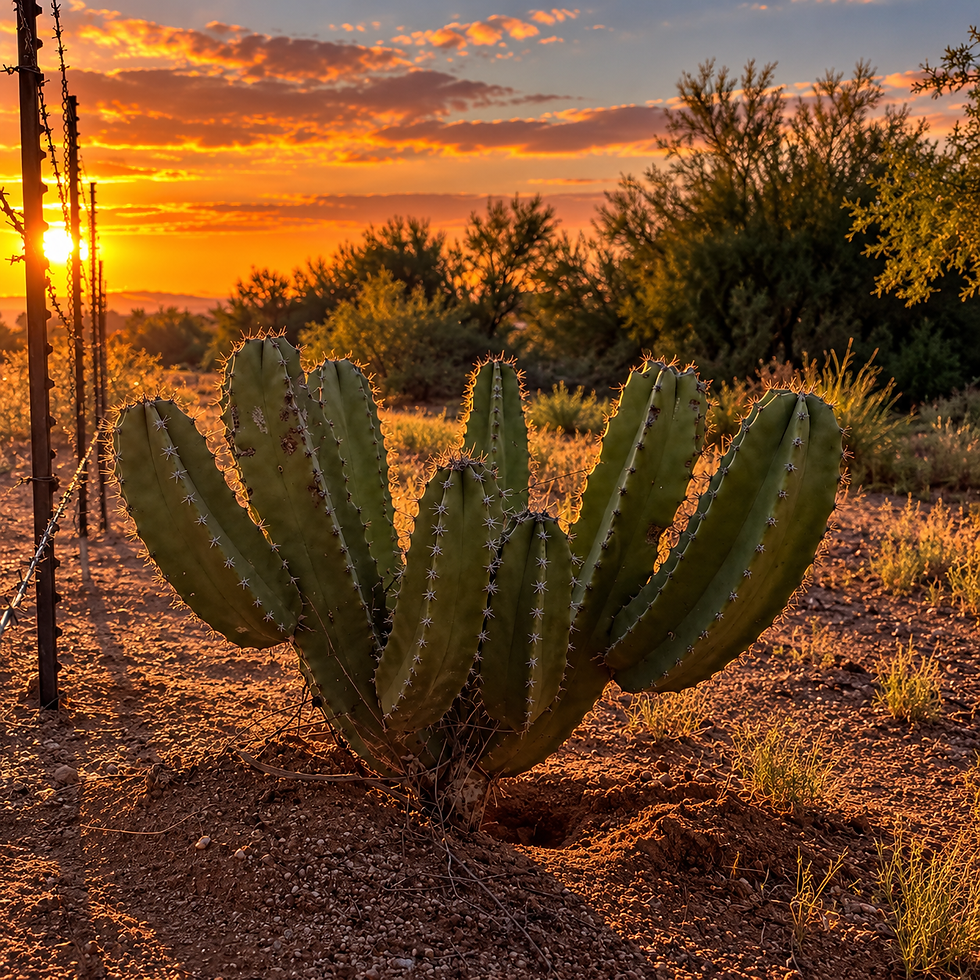
Lophocereus schottii, commonly known as the Senita Cactus, is a distinctive columnar cactus native to the Sonoran Desert.
Unlike many columnar cacti, Senita develops numerous slender stems and branches that spread outward, giving mature plants a dense, distinctive form.
Its unique growth habit allows the plant to expand across the landscape, often forming large clusters of closely spaced stems.
Senita also produces small, edible fruits that resemble other desert pitayas, adding another connection between this remarkable cactus and the people and wildlife of the Sonoran Desert.
A True Sonoran Desert Species
Senita is native to the Sonoran Desert, where it grows in some of the region's hottest and driest environments.
The species has evolved to survive:
Extreme heat
Prolonged drought
Intense sunlight
Limited water availability
Its succulent stems store water and help the plant withstand long periods of drought. Mature stems develop long, gray, bristly spines that give Senita its distinctive "old man" appearance.